How to Pick the Right Nursery Storage Basket Size: Complete Buying Guide for Growing Families
From newborn onesies to toddler play clothes, your nursery storage needs evolve fast. This buying guide breaks down how to choose the right basket capacity and why flexible storage solutions save space and money as your family grows.
Why Basket Capacity Matters in Nursery Organization
Parents quickly discover that baby laundry multiplies overnight. The right nursery storage basket does more than hold dirty clothes—it adapts to changing needs as your child grows from tiny newborn outfits to bulky toddler jackets and toy collections.
Choosing the wrong size means constant overflow or wasted floor space. Understanding capacity options helps you match storage to your actual lifestyle, whether you tackle laundry daily or batch it weekly.
Capacity Options: What the Liters Actually Mean
Storage baskets come in multiple capacities, and knowing what each holds makes decision-making easier. The 65L Woven Laundry Basket for Clothes line offers four distinct sizes designed to scale with family needs.
Breaking Down the Size Options
| Capacity | Best For | Typical Use Case |
|---|---|---|
| 50L | Single newborns, daily washers | Small nursery corners, minimal laundry volume |
| 65L | One child, weekly laundry cycles | Standard nurseries, balanced storage |
| 80L | Two kids or heavy toy storage | Shared rooms, consolidated storage |
| 100L | Large families, bulk laundry | Laundry rooms, multiple-child households |
Material and Design Considerations
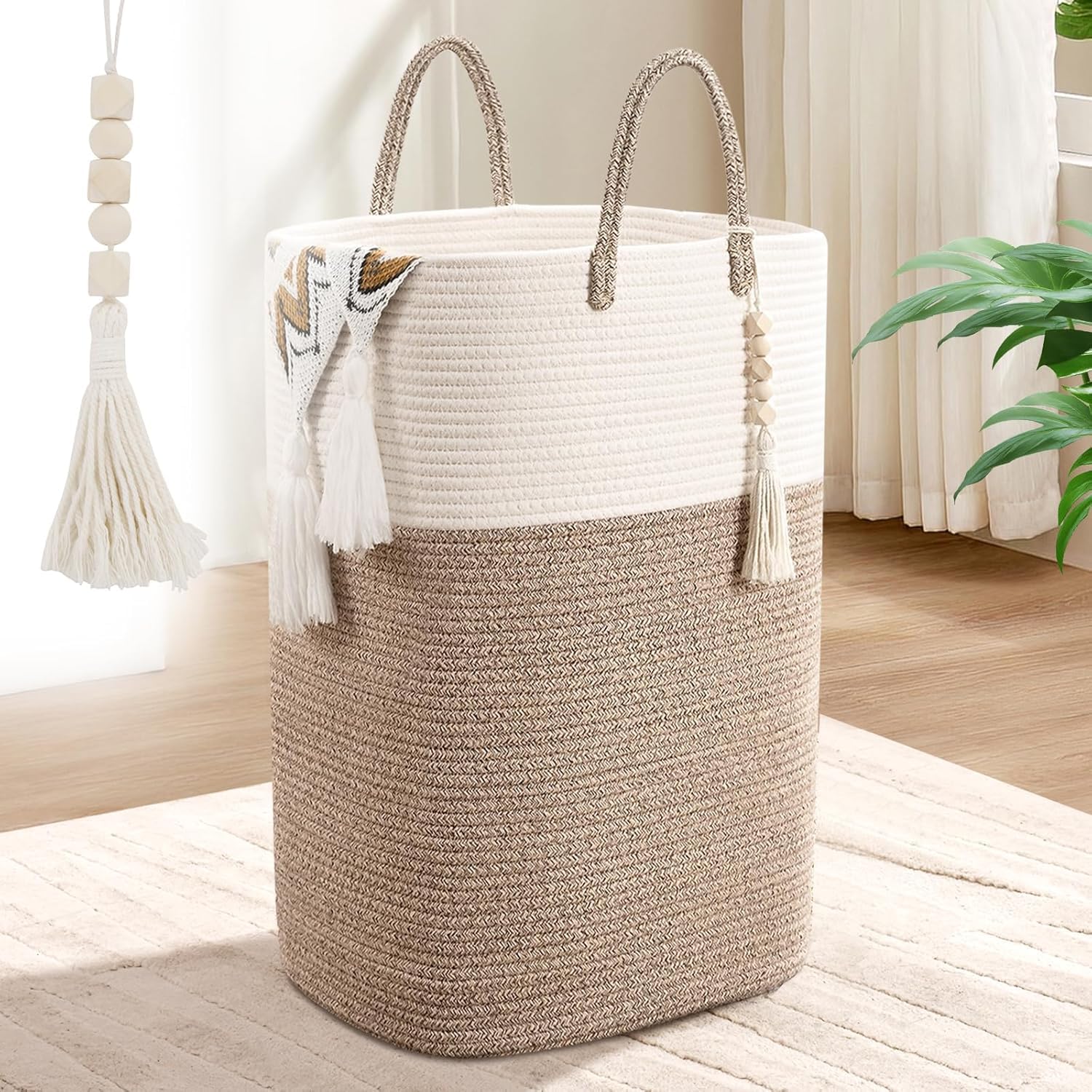
Construction quality directly impacts longevity. Rope cotton material offers breathability that prevents mildew buildup on damp baby clothes—a common problem with synthetic hampers. The sturdy weave maintains basket shape even when filled to capacity, avoiding the saggy look cheaper options develop over time.
The foldable design addresses a practical concern: storage flexibility. When visiting relatives or during room reorganization, collapsing the basket saves valuable space without requiring permanent disposal.
Shape Recovery and Maintenance
Woven baskets can lose shape during shipping or storage. The recommended reshaping method involves filling the basket with blankets and applying steam from an iron. This simple process restores structure without damaging the cotton material.
Versatility Beyond Laundry
The rectangular shape and neutral aesthetic work across multiple room types. Parents use these baskets for toy rotation systems in living rooms, extra blanket storage in bedrooms, and even diaper supply organization during the infant stage. The wooden bead tassel adds visual interest without overwhelming nursery decor themes.
Final Verdict
The 65L Woven Laundry Basket for Clothes offers practical capacity scaling that respects both budget and floor space. The 65L size hits the sweet spot for most single-child households, while larger families benefit from stepping up to 80L or 100L options. Rope cotton construction and the foldable feature provide durability and adaptability that justify the investment.
Who This Works For
- Parents needing adaptable storage that transitions through developmental stages
- Families seeking breathable fabric options for moisture-prone baby items
- Anyone wanting multi-room versatility in a single storage solution
- Households with limited space requiring collapsible storage
Who Should Skip This
- Parents preferring rigid hampers with lids for odor containment
- Households committed to daily laundry where smaller, fixed-size options suffice
- Those seeking waterproof materials for bathroom placement
Related Buying Guides
- How to Choose the Right Baby Shower Cap: A Beginner's Guide
- 3-Piece Starter Kit vs 10-Pack Bulk Supply: Choosing the Right Medicine Dispenser Strategy
- Jool Baby TinyBums Wipe Warmer: Gray vs Oatmeal Feature-by-Feature Comparison
- Car Window Shades for Baby FAQ: Answers to Your Sun Protection Questions
- Building Your Baby's First Medicine Kit for Fall 2026: Essential Dispensers for Cold Season
- Best Kennel Cover for Outdoor Dogs: Weatherproof Protection Guide